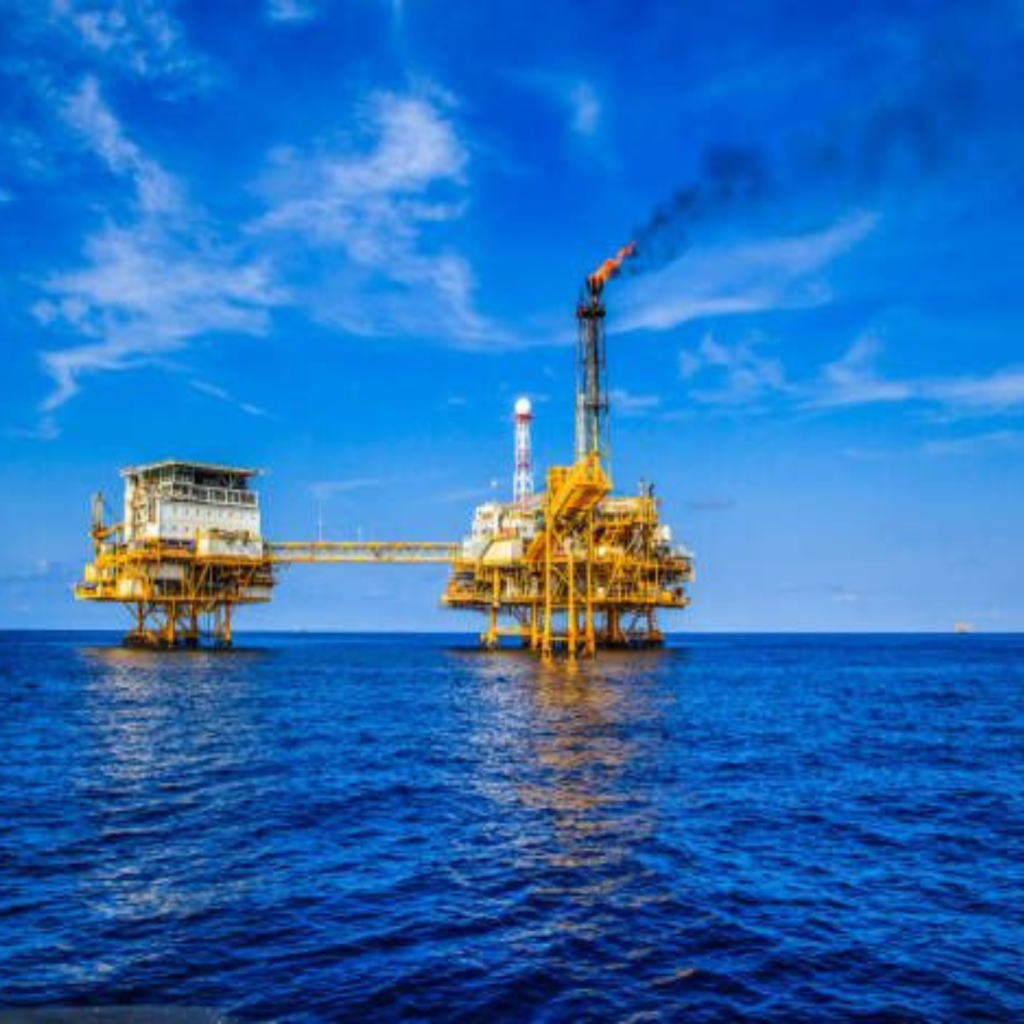
Oil and petroleum projects in the Arctic operate in an environment where improvisation has little place. Extreme cold, ice exposure, long logistics chains, and strict environmental regulations mean that offshore developments in northern Norway must be engineered with exceptional precision.
In this setting, success is driven less by speed and more by long-term operational discipline. That reality is evident in the recent redesign of offshore petroleum projects in the Barents Sea, where operators are re-evaluating how to develop large oil wells in one of the harshest operating environments on Earth.
The Wisting oil field: location and scale
The Wisting oil field lies in the eastern Barents Sea, roughly 300 kilometers north of mainland Norway. It is widely regarded as the world’s northernmost offshore oil field development.
Recoverable resources are estimated at close to 500 million barrels of oil, placing Wisting among the most significant petroleum discoveries in Arctic waters, according to Reuters. Yet its remote location is both an asset and a challenge. Limited infrastructure, severe weather, and seasonal ice conditions have historically driven development costs well above those of comparable North Sea projects.
A project redesigned for viability
After costs escalated beyond acceptable thresholds, the project entered a comprehensive technical and economic reassessment phase. Equinor, together with its partners, initiated a full redesign aimed at restoring viability.
The most visible shift came in the production concept. Initial plans centered on a specialized circular FPSO engineered for Arctic conditions. While technically robust, this solution proved costly to construct and operate. The revised strategy favors a more conventional FPSO design, reducing capital expenditure, simplifying maintenance, and improving construction schedules.
The updated development plan also includes fewer production wells and a smaller subsea footprint. For offshore teams, this means simpler layouts, fewer interventions, and more predictable operations throughout the field’s lifecycle.
What this means for offshore operations
Operationally, fewer systems often translate into safer systems. In remote Arctic settings, reducing complexity lowers risk during drilling, installation, and routine production activities.
This approach reflects a broader offshore trend: prioritizing reliability and operability over maximum theoretical output. The Wisting redesign illustrates how modern petroleum developments balance resource potential with realistic execution.
Norway’s offshore oil advantage
Norway’s offshore production is dominated by light and medium crude oils. These grades have lower viscosity and sulfur content, making them easier to produce, transport, and process—an important advantage in cold environments like the Barents Sea.
Light crude flows more easily at low temperatures and requires less onboard heating, reducing energy demand on offshore facilities. This characteristic has long supported Norway’s reputation for efficient offshore petroleum operations and remains central to the economic case for Arctic developments such as Wisting.
Why it matters
Arctic petroleum projects are no longer about pushing technical limits at any cost. They are about designing oil wells and offshore systems that can operate safely, efficiently, and profitably, where every engineering decision directly affects long-term success.