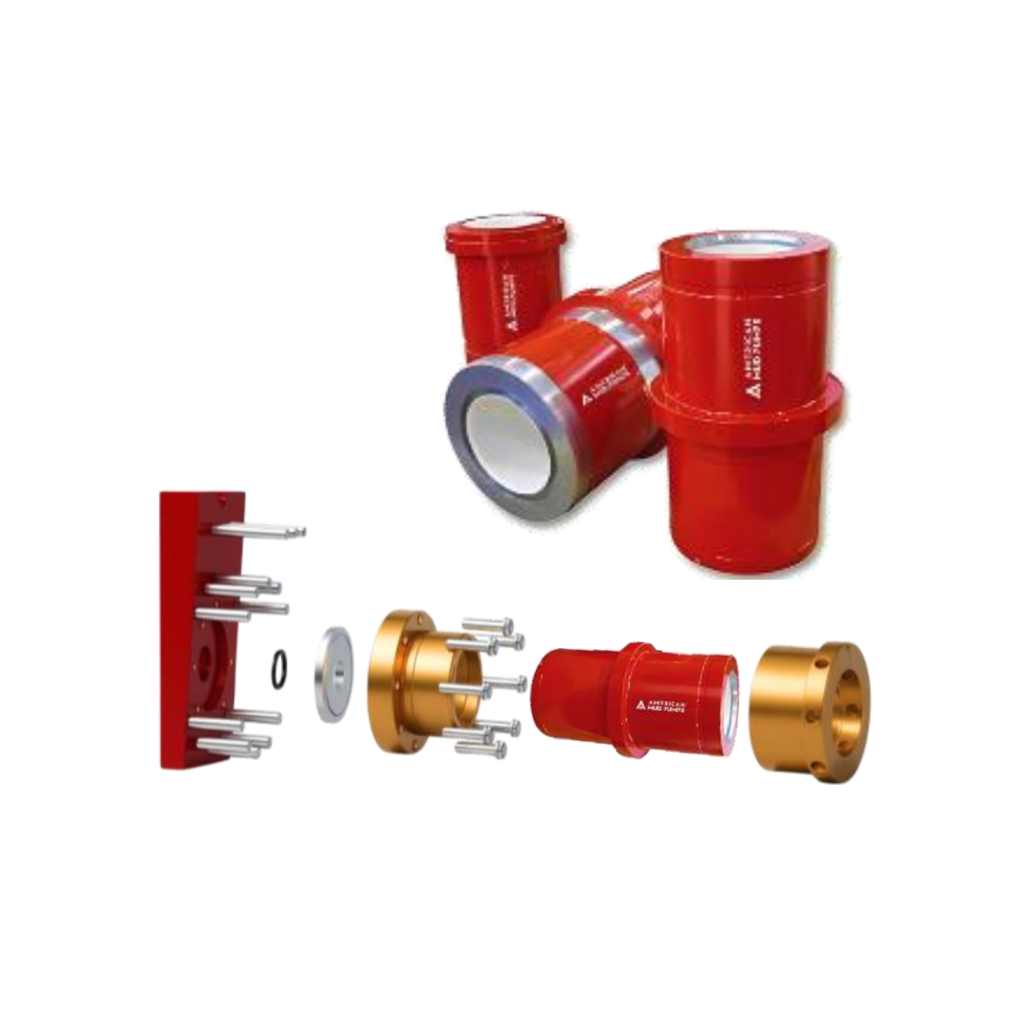
In today’s high-pressure drilling environment, few components operate under harsher conditions—or fail at a higher cost—than the mud pump liner.
As formations grow more abrasive, mud weights fluctuate, and performance margins tighten, operators are increasingly demanding liners that deliver longer run times, fewer changeouts, and predictable wear behavior. This combination of requirements is precisely why ceramic liners and advanced high-alloy alternatives are rapidly becoming the preferred choice across major drilling programs.
Unlike traditional chrome-iron liners, ceramic liners maintain exceptional hardness and surface integrity even under extreme solids loading. Their advanced microstructure resists progressive abrasion that typically leads to scoring, washout, and premature failure.
The result is a liner that not only lasts significantly longer, but also maintains consistent performance throughout its service life—providing confidence as operating pressures exceed 4,000–4,500 PSI.
Field results continue to validate this shift. In a recent West Texas deployment, RedRock ceramic liners exceeded 7,200 operating hours, more than doubling the runtime achieved by the liners previously used on the same fleet. The rig reported smoother pressure profiles, reduced washout events, and a sharp decrease in liner-related interventions.
Operationally, the outcome is clear: increased drilling time, reduced downtime, and a substantially lower cost per operating hour.
Cost efficiency is where ceramic liners deliver their strongest advantage. While initial acquisition costs may be higher, extended service life and reduced maintenance requirements generate measurable savings over the duration of a drilling campaign. Fewer liner changeouts also mean fewer service interruptions, directly improving non-productive time (NPT) metrics.
Compatibility further strengthens their value. Modern ceramic and high-alloy liners are fully interchangeable with the most common triplex and quintuplex pumps, including Gardner Denver, National, Emsco, Ideco, and Weatherford models. For operators managing mixed fleets, this simplifies procurement and ensures consistent performance across rigs.
As drilling programs continue to push deeper and operate under more demanding conditions, reliability at the component level becomes non-negotiable. Ceramic liners are no longer just an upgrade—they are quickly becoming a best practice for high-pressure, abrasive drilling environments.
The evidence is clear: superior wear resistance, stronger pressure performance, lower operating costs, and proven results in the field.